Showing posts with label Art. Show all posts

28 January 2012

Underground Desert cities


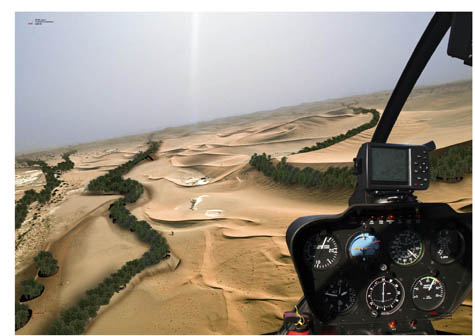
© Magnus Larsson, Dune Arenaceous [taken from Magnus Larsson web page]

Magnus Larsson envisions to build a green wall across Africa, a Dune Arenaceous that irrigate the soil and prevent the environment from desertification to sustain an underground city. 

image
Dune Arenaceous © Magnus Larsson [taken from Magnus Larsson web page]

Larsson uses the biological properties of a marshlands bacteria - the Bacillus Pasteurii - which he flushes onto the dunes to solidify sand into sandstone and build a city of sandstone structures underneath the Sahara, using the desert soil.


© Magnus Larsson

By building without machines or architects, he would leave the  bacteria sculpt the landscape of the city. The biochemistry of sand solidification recalls the sedimentation of rocks like limestone, creating interesting cavernous shapes after years of aggregation.

image
© Magnus Larsson

Biological scientists will wonder about the long term effects of importing a non-native organism into a vast environment like the Sahara; the bacteria which could potentially solidify the whole desert - recalling the invasive nature of plants like Kudzu in America and Asia - can also save Africa from aridity.

Sectional perspective of underground city
Sietch Nevada © Matsys Design [taken from Matsys design we page]

Larsson's dune habitat echoes Sietch Nevada, an experiment of Matsys Design which re-thinks the way ancients civilizations - like the Nabataeans in Petra - used to control water and create artificial oasis in the desert.
The Sietch Nevada project brings to reality Frank Herbert's Dune novel. Here, underground communities master the art of guiding and storing water via a network of underground canals to answer water shortage in Southwest America and avoid water wars.


13 November 2011

Building the Revolution


Pare05new.jpg
Narkomfin Communal house © Richard Pare 


Former soviet architecture is monumental, industrial and cold and that melancholy makes me wonder how life was before the revolution ? 
One photograph by Richard Pare captures almost by accident the loneliness of a communal house in Moscow : with its dinning room and its pilled turquoise walls, the reproduction of Raphael's Sistine madonna above the chimney, the little Pushkin statue and the faded flowery cloth on the table, this apartment is infused with the passage of time, testimonies for a lifetime not spent in leisure but working in factories. 
Pare's photos of Power stations, derelict buildings and abandoned rooms now standing like post-apocalyptic background with their obsolete machines and futuristic enginery brings to mind scenes of surreal work conditions. 

1980
Brazil © Terry Gilliam


15 January 2011

Raising dust


Naked Freedom © Marina Gržinić & Aina Šmid 

Raising Dust explores themes of place and identity in post-colonial Europe, giving a voice to eastern european artists which work focuses on geopolitical minorities. Calvert 22 opens the frontiers to what is seen in Europe as a territorial periphery. The show is theoretical but exposes the aftermaths of capitalism in Europe.


Naked Freedom © Marina Gržinić/ Aina Šmid


In her essay De-grading capital(ism) and its production of fear, Marina Gržinić denounces hierarchy, surveillance, intensified privatization, discrimination and exploitation as the ill-beings of the capitalist machine. Their consequences, isolation, racism and social segregation, are exemplified in Naked freedom, an accompanying video.
Following in the steps of Achille Mbembe who swaps the term 'biopolitics' for 'necropolitics' - politics that manages life through the production of death - Marina Gržinić coins the term 'necrocapitalism', to refer to a system that pretends to create a better life while solely accumulating capital and producing death.
In the filmed performance, artists, musicians and youth workers from Ljubljana oppose to capitalism and colonialism with a creative, alternative and radical positioning.


40,000,000 © Zbyněk Baladrán/ Photo © Steve White


The incapacity to think for oneself is another nevrosis of the capitalist regime in 40,000,000. Conditioned by primal desires and subordinated to consumerism, we insure the perpetuation of its system.


AcDcWc © Saso Sedlacek 

Slovenian Saso Sedlacek recycles pipes and plastic bottles into an object of commodity. The toilet-powered chandelier switches on by transforming human excrement into electricity.


Street Sweepers and Broom makers in Jodhpur © Navroze contractor

Throughout the exhibition, the archetype of the broom is used as leading metaphor for physical labour : from the streets of Jodhpur in India to the hills of Romania, people survive by fetching stalks and grasses handcrafted into traditional brooms.


The curse of the Hedgehog © Dumitru Budrala 

In The curse of the hedgehog, an old woman tells the legend of a mythic hedgehog, exposing how the Baiesi people share their outcast status with this animal. The film follows a Roma gypsie family trading handmade brooms and baskets with local farmers in exchange for food and money. Isolated in their romanian mountains, endlessly fighting hunger, the Baiesi are poorer than before capitalism. Anthropologist Dumitru Budrala unveils the truth about what happens at the end of the food chain.


16 December 2010

Mind-altering spaces


Alice in Wonderland © Jonathan Miller © BBC

Everything is so queer today ...
if I am not the same then the next question is who in the world am I ?
Ho ! That's the big puzzle : who am I ?

says Alice, while sipping at the "drink me" bottle.


Tobacco, tea, coffee, opium, peyote, kava or betel seeds : the cultural differences between what is legal and what is not (cannabis grown in England is illegal but prescribed as medecine in California), and the thin line between drug and medicine somehow allow mind-altering substances to permeate cultural habits and re-define moral ethics. 
Governments not only play a part in the drug trade, from the history of opium transport between China and England to the funding of the recent conflict between Afghanistan and the West, the drug trade also shapes the world by building empires (like the british one).


Laudanum #5 © Tracy Moffatt © L. A. Galerie - Lothar Albrecht

Before the 1920's Drugs Act, poppy was legally grown for its medicinal properties, provoking the mingling of drugs' discovery with medical research and the spreading of risky substances in laboratories and pharmacies : children coughing syrup containing opium was sold in pharmacies, along with eye drops and dental kits containing cocaine; Sydenham's Laudanum, a tincture made from morphine and codeine, became popular as pain relief in the 17th and 18th centuries, bringing the hallucinogen experience to victorian homes. 


Mescaline drawings © Henri Michaux

Artists self-experimenting with psychedelic drugs and hallucinogens hunt art and literature. Thomas de Quincey's Confessions of an English Opium eater in 1821 relates an accidental addiction to Laudanum while curing pain. Beaudelaire's Les paradis artificiels or Lewis Carroll's stories under mushroom influence inform what Aldous Huxley calls a new art of seeing the world; an altered spatial experience made visible by Henri Michaux automatic/ seismographic mescaline drawings. 


Phonokinetoscope © Rodney Graham © MUDAM


By staging Albert Hofmann cycling through the Tiergarten in Berlin on the day he discovers LSD, Phonokinetoscope re-creates the first trip under chemical hallucinogen, a mixture of vivid colours, distorted sounds and recurring thoughts where senses melt into one another.


Shulgin's Laboratory © Michael Rainer

And then there is Sasha Shulgin, the grandfather of exctasy who spends the 70's and 80's setting up a laboratory in his californian home.
Thanks to a license on the behalf of the Drug Enforcement Administration that gives him the right to possess and synthesise the chemical of MDMA, Shulgin invents and experiments with more than 150 drug compounds. 
Research conducted on psychedelic drugs in the sixties is linked to the treatment of depression and post traumatic stress disorder, an aspect of MDMA still invested today by underground therapists like Shulgin.
After trying mescaline, psylocibin and exctasy, Shulgin saw drugs as tools for the mind; a critical thing in his view since our entire universe is contained in the mind and the spirit.


13 December 2010

The Independent in 30 days


Ulysses way © Damián Ortega © Barbican Centre/ Photograph © Eliot Wyman


Damián Ortega has created a series of installations for the Curve Gallery at the Barbican centre that answers daily titles over one month of a newspaper's events. He has picked The Independent as paper of choice because, he says, it is the most familiar in terms of ideological position and it reminds him La Jordana, the newspaper where he worked as political cartoonist in Mexico. 
Ortega gave himself the task to produce one piece a day, working from nearly nothing, using underrated materials such as concrete, fire bricks, rocks, wooden planks, found, discarded, everyday objects to capture aspects of the news, de-construct and re-contextualise.


The big melt - cities at risk, The Independent, 31st of August 2010


In september, the highlight is on the Chilean miners, the BP oil spill and the flood in Pakistan. The work emphasizes economical and cultural injustice while stressing on climate change and capitalism affecting the welfare of vulnerable communities : a bicycle carries the possessions of a flood survivor in Pakistan; a precarious aggregate of wooden planks and empty water containers resembles an obstacle course, depicting the state of a submerged Pakistan two weeks later, drawing an uncertain future for the fleeing survivors now facing malaria. The installations' visual impact informs the viewers in a way that the fleeting news can't, despite the disposable manner we consume news, the work impacts on the viewers' memory.


No link - 2010 © Damián Ortega © Barbican Centre/ Photograph © Eliot Wyman

The iconic image of the bicycle counterbalances the highlight of another day's title, when Ryanair's boss denials global warming, an assumption questioned by Ortega's plane made of cigarettes. Ortega needs to work fast and that immediacy and experimental spontaneity responds well to the essence of the news.


Immigrant song © Damián Ortega © Barbican Centre/ Photograph © Eliot Wyman


He also find the opportunity to exemplify the global cultural gap of the North-South divide, or as one journalist from The Independent puts it why across the world the poor are kept poor so the rich can be kept rich. At the beginning of the show, a zigzagging brick wall mimicking a graph of statistics that depicts the number of illegal immigrants living in America, acts as a reminder of the mexican borders daily crossed by individuals hoping for a better life.


© Barbican Centre / Photograph © Eliot Wyman


On the other side of the wall, thrown-and-broken eggs shells transcend an incapacity to confront the capitalist machine and recall the fragility of human life in the streets of Mexico.
That image echoes another photograph of dead students caught between local dealers and the drugs war police, from an article that condemns a western need for drug consumption that encourages a war on foreign ground but not on home ground.


Greed and Graft © Damián Ortega © Barbican Centre/ Photograph © Eliot Wyman

At the beginning of the exhibition, the shell of a cemented barrel in which a candle burns slowly is connected to its top by an electric wire, symbolising the suffocating entrapment of the Chilean in a copper and gold mine. The hole with no alternative exit summarizes pretty simply the underlying thread of the show - capitalism versus poverty, greedy profit versus human safety.
Ortega is very much aware of his comfortable position as an artist addressing political issues. Like artists Allora & Calzadilla,
 while avoiding to be confined within the limits of political art, his work is rooted in political activism.


30 November 2010

The Atlas group


Let's be honest the weather helped - 1998-2006 © Walid Raad/ The Atlas group 

Meticulously referenced in the fictional archive collective Atlas Group, the life of Lebanon spans over thirty years of civil war.
This show at the Whitechapel gallery opens onto a series of found photographs Portraying every vehicle used as a bomb from the 75-90 war, representing groups of men surrounding engines of blasted cars.
The demolished streets of Beirut are depicted in their architectural chaos to refuse the erasure of memory, while human casualties are nowhere to be seen, the streets of Beirut remain deserted.
Walid Raad has elaborated ingenious ways to evoke his hometown history : by creating fictive characters, such as doctor Fakhouri who takes photos around Lebanon, his alter-egos reclaim dimensions that the war tries to eradicate. If from time to time the factual tone glimpses into poetry, we are quickly brought back to the reality of war : the playful colored dots on black and white photographs showing abandoned streets, systematically record the places, cars, walls, trees where shot bullets were found. Each color corresponds to a bullet, each bullet to a manufacturer from global countries that supplied the armies of Lebanon - nearly all of Europe at the time.
With his neat, documenting style, Raad makes war a cold, calculated spectacle. It's not glamorous, it's not pathetic but it depicts the hopeless, horrifying aftermaths of a country at war.

26 October 2010

The plover and the boat


Under discussion © Allora and Calzadilla © Chantal Crousel © Lisson gallery

If you have been to the Frieze Art Fair in recent years, you may now expect to wander amongst an accumulation of glass cabinets, mirrors and neon signs. 
As someone exclaims on my right "I've been here for three hours and haven't seen any art yet !", so it's a relief to bump into meaningful work - mostly of political sustance. 
First, Allora and Calzadilla famous for their film Under discussion where a puertorican activist from a disobedience movement crosses the restricted waters of Vieques on a motorised table. 
The table was used as metaphor for discussion on fishermen rights and access to environmental justice.


The Plover's Wing © Marcus Coates © Kate MacGarry/ Photo © Chris Osburn

Then, a subversive video who has created a line-up of visitors stuck onto the screen trying not to giggle despite the serious context. 
At Kate MacGarry gallery all eyes are on Radio shaman and the Plover's wing : the bemused audience tries to make sense of this guy in adidas tracksuit, broken glasses and badger-hat who drinks tea with the mayor of Holon. 
As he goes into a trance, and grunts like a plover, delivering answers about a social dilemma, the israeli mayor doesn't appear so impressed - or maybe just a bit embarrassed.
And like the female translator who probably gets bored often and now has to resist exploding into laughter, this guy has made my day !
Thank god for Marcus Coates !


17 October 2010

Answers from the Lower World

Mouth of God © Kate MacGarry © Marcus Coates

Just before reaching the Kate MacGarry gallery in London to see Marcus Coates show, there is The Last Tuesday Society : a taxidermy boutique filled with skulls, dead animals and Gothic curiosities. 
A coincidence that will later remind me that it's less the macabre that Coates celebrates in his work than the transcending of animal spirit.
His costumes from shamanic rituals are displayed in the gallery : a suit with deer's antlers, an adidas tracksuit with reebock trainers and dead badger hat, a metallic suit with white horse's head.


Questions & Answers © Kate MacGarry © Marcus Coates


The book tucked in the adidas tracksuit's pocket is an encyclopedia of israeli and middle east birds (a reference that will make sense after viewing the plover's wing), the mannequin that resembles a city worker wears shoes laced by blank keys, referring to a pointless routine, a destiny unfulfilled, the recent banking system collapse ?
In a nearby glass cabinet, shamanic props are shown in a false didactic manner : a masticated and reconstituted kit-kat, an onion bag from tesco filled with feathers from the Jay Garrulus Glandarius etc...


Firebird, Rhebok, Badger and Hare © Kate MacGarry © Marcus Coates

On the wall, paper sheets handwritten in english, japanese or hebrew describe his journeys in the underworld as he attempts to answer questions such as What is capitalism ? or What is the meaning of life if we all die in the end ?
As the stories unfold, Coates is guided by animals encountered in spirit so that 
a snake, a line of starfish or a flock of birds help him deliver answers in bird language.
 
It's difficult to imagine what really happens during shamanic performances, unless having a glimpse at some of his videos.


Beryl - Journey to the Lower world © Kate MacGarry © Marcus Coates
photo ©
Nick David

As it appears, Marcus Coates doesn't preach to the preached. His rituals are a surreal act between integrity and the farcical, forcing us to assess wether it's for real : do we cross the line to feel for the people and situations encountered ? do we keep safe, choosing to get the giggles ? - aren't we doing a bit of both ?
Somehow, the odd shaking, sweating and squeaking helps to bring the truth safely, as it puts less attention on the challenging answers. Coates helps by going at the heart of the matter, in a subliminal manner.


At the pub © Kate MacGarry © Marcus Coates

When he dresses in animal skin having a pee at the pub, or films himself performing a shamanic ritual in a red-light district in respect to prostitutes (Radio shaman - filmed in Norway, as nigerian women challenge respectable locals), contrasted emotions are acted out. Which can be moving. 


The shamanic trance he performs in front of the residents of a soon-to-be-destroyed tower block in Liverpool looking for housing alternatives(Journey to the Lower World) is cathartic for the audience. 
As he waits for a lift in their council estate or is having tea with a bunch of old ladies, wearing deer's antlers and dead animal skin, his presence in casual, everyday environments - the office, the city streets, the council estate -, highlights our disconnection from the natural world and its associated melancholic longing.


Eventually, his enactement of animal's behaviour connects with a time beyond human, a place we used to inhabit.
If less comfortable reaching a trance amongst practitioners in posh western suburbs, Coates is likely to be found walking the sacred lands of Australia in search of dreamtime stories.
 

Marcus Coats Red Fox

Red Fox Vulpes vulpes © Kate MacGarry © Marcus Coates

It's the flux between roars of laughter and fleeting moments of metaphysic wonder which by contrast places Coates' performances at the heart of art rather than shamanism.
While Joseph Beuys chose the coyote as spirit guide to dig out the american psyche, Coates turns towards his local birds, as metaphor of his cultural heritage - where the traditions of twitching and trainspotting are celebrated along the geek and the awkward.
As one uncanny image of him crawling as a red fox 
recalls, it is his way to reach a place that transcends formative childhood memories, when pretending to be animal meant feeling human.


Thanks to Fabio Altamura and the Kate MacGarry gallery