
Let's be honest the weather helped - 1998-2006 © Walid Raad/ The Atlas group
Meticulously referenced in the fictional archive collective Atlas Group, the life of Lebanon spans over thirty years of civil war.
This show at the Whitechapel gallery opens onto a series of found photographs Portraying every vehicle used as a bomb from the 75-90 war, representing groups of men surrounding engines of blasted cars.
The demolished streets of Beirut are depicted in their architectural chaos to refuse the erasure of memory, while human casualties are nowhere to be seen, the streets of Beirut remain deserted.
Walid Raad has elaborated ingenious ways to evoke his hometown history : by creating fictive characters, such as doctor Fakhouri who takes photos around Lebanon, his alter-egos reclaim dimensions that the war tries to eradicate. If from time to time the factual tone glimpses into poetry, we are quickly brought back to the reality of war : the playful colored dots on black and white photographs showing abandoned streets, systematically record the places, cars, walls, trees where shot bullets were found. Each color corresponds to a bullet, each bullet to a manufacturer from global countries that supplied the armies of Lebanon - nearly all of Europe at the time.
With his neat, documenting style, Raad makes war a cold, calculated spectacle. It's not glamorous, it's not pathetic but it depicts the hopeless, horrifying aftermaths of a country at war.

The Museum of Incest : A Guided Tour © Neue Alte Brucke © Simon Fujiwara
photo © Anna-Lucie Feracci
What is the link between the first man on earth and the history of incest ? Could human existence be reduced to a tale of transgressive eroticism ?
Simon Fujiwara's slide presentation transports us into a parallel reality made of whimsical thoughts, witty accounts of intimacy. The fluidity of his speech, the constant use of digression create a sense of de-construction of the narrative, an alternative auditive space, an heterotopia of language.
Fujiwara's imaginary architecture exists as a non-object, a non-space. A museum which artefacts don't really exist, since incest is taboo, which focuses on archeology, a science that isn't accurate, can only refer to a form of invisibility.
The art of Fujiwara is the art to bewitch, the art to tell stories.

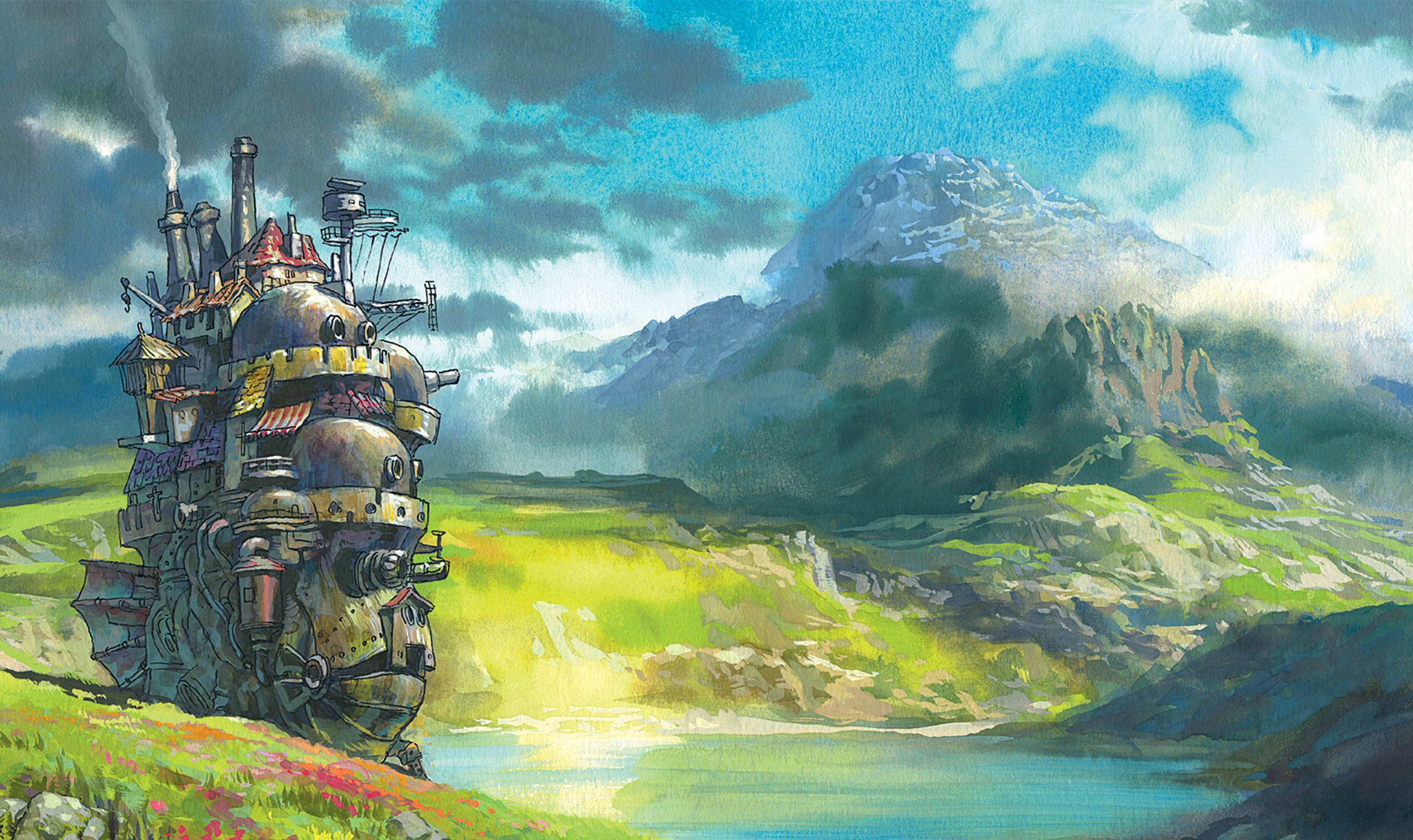 Howl's moving castle © Miyazaki
  © Archigram
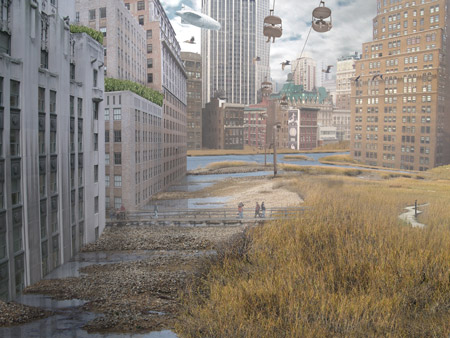 Aqualta © Studio Lindfors


